
'Building a whole product with the railways was challenging; we had to figure out how to load and unload a train when it stops for only about five minutes at a station.' 'We also helped them understand the revenues this would generate for them.'

Finance Minister Nirmala Sitharaman on Thursday said India has ramped up the import of crude oil from Russia at discounted prices amid sanctions on Moscow as part of the country's inflation management. "In a situation where global prices were going beyond anyone's affordability, at that stage to take a very strong political decision, I respect the prime minister for his courage on this to get it from Russia because they are ready to give it to you at discount. And how speedily did we manage to do it," she said. India ramped up its import from Russia from about 2 per cent of the total shipment of petroleum products to 12-13 per cent in a couple of months as part of inflation management, she said at a seminar organised by economic think-tank Icrier.

India's import of cheap Russian oil scaled another record in May and is now more than the combined oil bought from Saudi Arabia, Iraq, UAE and the US, industry data showed. India took 1.96 million barrels a day from Russia in May, 15 per cent more than the previous high in April, according to data from energy cargo tracker Vortexa. Russia now makes up for nearly 42 per cent of all crude oil India imported in May.

Barely days after imposing a 40 per cent export tax on onions to cool down soaring prices, which, in turn, triggered widespread protests across the main growing belts, the Centre on Tuesday sought to mitigate both political and economic tensions gripping parts of Maharashtra. It decided to procure an additional 200,000 tonnes of onions at Rs 2,410 per quintal for its buffer stock from farmers, a rate that is strikingly close to the price at which they were being exported before the 40 per cent duty was levied on August 19. The export price before the imposition of the duty stood at around $320 per tonne free on board (approximately Rs 2,650 per quintal).

Textile stocks have exhibited a mixed performance so far this calendar year (CY23), amidst higher domestic cotton prices and tepid global demand. Shares of Page Industries, Dollar Industries, Lux Industries, and VIP Clothing have declined up to 13 per cent so far in CY23, as against a 9 per cent jump in the S&P BSE Sensex. On the contrary, shares of Arvind, Welspun India, Raymond, and Gokaldas Exports have gained up to 51 per cent, during the same period.
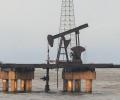
What is more surprising is that a surge in Russian oil supplies has come after the G7 imposed stringent sanctions on Moscow.
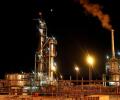
India's import of discounted crude oil from the Russian Federation hit an all-time high in May, with state-run refiner IOC becoming the biggest importer of Russian oil, relegating Reliance Industries to the second place, trade and shipping data show. Indian imports of Russian oil, accounting for over 46 per cent of its total crude oil imports in May, have grown after strong backing by New Delhi, with state-run refiners powering imports of discounted crude. Discounts on Russian oil average around $10 a barrel, said an official from a state-run refiner. IOC's May purchases rose by 64 per cent on the month, and accounted for half of its total crude imports last month, ship tracking data show.

With nearly a quarter of U.S. energy shares' value wiped out by oil's six-month slide, investors are wondering if the sector has taken enough punishment and whether it is time to pile back in ahead of earnings reports later this month.

Shipments from Russia rose nearly 33 per cent to $1.1 billion in March from $831.17 million in the previous month, which was when the country mounted aggression on Ukraine and faced sanctions from Western nations, the data accessed by Business Standard shows. Growth in imports was largely on account of oil, people aware of the matter said. The Department of Commerce is learnt to have written to the Ministry of Petroleum and Natural Gas (MoPNG), seeking details of imports, including the payment mechanism, which India has not made public.
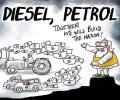
The government on Wednesday scrapped a week-old tax on the export of petrol and cut windfall taxes on overseas shipment of diesel and ATF as well as the one imposed on domestically produced crude oil after global oil prices fell. While the Rs 6 a litre export duty on petrol was scrapped, the tax on the export of diesel and jet fuel (ATF) was cut by Rs 2 per litre each to Rs 11 and Rs 4 respectively, government notifications showed. The tax on domestically produced crude was also cut to Rs 17,000 per tonne from Rs 23,250, a move that will benefit producers like ONGC and Vedanta Ltd.
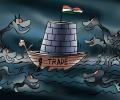
The growth in world trade is expected to slow down to one per cent in 2023, due to global uncertainties, according to a WTO forecast. The World Trade Organization (WTO) has also projected a growth of 3.5 per cent in global trade this year, as against the April estimate of 3 per cent. World trade is expected to lose momentum in the second half of 2022 and remain subdued in 2023, as multiple shocks weigh on the global economy, the multi-lateral body has said in a statement.

Petrol doped with 20 per cent ethanol was rolled out on Monday at select petrol pumps in 11 states and union territories as part of a programme to increase use of biofuels to cut emissions as well as dependence on foreign exchange-draining imports. At present, 10 per cent ethanol is blended in petrol (10 per cent ethanol, 90 per cent petrol) and the government is looking to double this quantity by 2025. Prime Minister Narendra Modi launched the higher 20 per cent ethanol blended petrol two months ahead of the planned rollout in April, at the India Energy Week (IEW) 2023 in Bengaluru.

Sri Lanka is facing its worst economic crisis since gaining independence from the UK in 1948.

India may see a structural shift in supplies of crude oil with Russia emerging as a key source of fuels, a development that reduces New Delhi's dependence on West Asian oil, gives Indian refiners better bargaining power with price-setter Saudi Arabia, and improves overall energy security. The unexpected surge in supplies of Russian crude in the last few months, unthinkable until the war in Ukraine, may also deliver other unforeseen gains such as boosting exports of refined fuels to Europe, which historically has counted on Russian shipments. India has jumped on to the bandwagon of opportunistic buying of Russian crude but if calibrated carefully, Urals crude can be a long-term asset for India refiners.

India will need to travel back in time and seek inspiration from football greats Tulsidas Balaram and Chuni Goswami to deftly dribble around and sidestep the West-imposed price cap on exports of Russian seaborne crude oil. India depends on imported oil to meet 86 per cent of its needs, of which nearly a quarter now comes from Russia. The copious flows are roughly 10 per cent cheaper than competing suppliers helping India save billions of dollars in fuel costs.
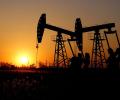
India, the world's third-largest energy consumer and importer, on Wednesday warned of high oil prices hurting the nascent and fragile global economic recovery and floated an idea of long-term supply contracts that provide predictable and stable pricing. Speaking at the India Energy Forum by CERAWeek, Oil Minister Hardeep Singh Puri said there was a mismatch between demand for oil and the supplies producers such as OPEC+ were making and there was a case for raising the production. The world, he said, needs "predictable, stable and affordable" prices for it to recover back to pre-pandemic levels.

Essar group on Friday announced the signing of a USD 2.4 billion (Rs 19,000 crore) deal to sell certain ports and power infrastructure to ArcelorMittal Nippon Steel in one of the largest post-pandemic merger and acquisition deals in India. In a statement, the Ruia-run firm said the deal also envisages a 50-50 joint venture between Essar and ArcelorMittal for building a 4 million tonnes a year LNG import terminal at Hazira in Gujarat. Without giving details, it only identified certain ports and power infrastructure that are primarily captive to operations of the Hazira steel plant, which was acquired by ArcelorMittal Nippon Steel (AM/NS) in 2018-19, as part of the deal.

The wider NSE Nifty touched a low of 10,652.40 before finishing at 10,671.40, showing a loss of 97.75 points, or 0.91 per cent.
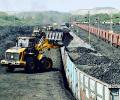
Eleven bidders, including Adani Enterprises, have shown interest in the first-ever coal import tender issued by national miner Coal India (CIL). Recently, state-owned NTPC awarded 6.25 million tonnes (mt) of imported coal tender worth Rs 8,300 crore to Adani Enterprises. CIL, in a public statement on Tuesday, said: "The prominent Indian agencies among them (11 coal importers) were Adani Enterprises, Mohit Minerals, and Chettinad Logistics. "A couple of coal exporting agencies from abroad, including one from Indonesia, have also shown interest," it said.

A pregnant Sri Lankan woman, who had been in a queue for two days to obtain a passport to leave the crisis-hit country for employment overseas, went into labour while waiting for her turn on Thursday and delivered a baby girl.

Even as the Group of Seven (G7) price cap on Russian crude oil enters into force as of December 5, India has been assured it will continue to receive the existing deep discounts on Russian oil, for the time being, informed officials. "We have been assured by our Russian partners of uninterrupted crude supplies at the existing rates for the time being. "There were a lot of reports of changes in (India's) buying patterns after the global price cap took hold.

Finance Minister Nirmala Sitharaman on Thursday said inflation management cannot be "singularly" left to the monetary policy as a majority of activities are outside its purview in the current context. Speaking at a seminar organised by economic think-tank Icrier, the finance minister said that both the fiscal policy and the monetary policy have to work together to contain inflation. Consumer price index (CPI) based inflation or retail inflation is ruling above the Reserve Bank's comfort level of 6 per cent since January.

Bank of New York Mellon Corp has pulled out of providing financial services to the Adani group and its Carmichael coal mine in Australia, saying the venture is incompatible with its environmental, social and governance rules.

The Indian position on the Russia-Ukraine war and the unconditional treaty between China and Russia appear to have caused some ripples in India-US relations and led to a reappraisal of India's usefulness to the US in the eventuality of a conflict with China, notes Ambassador T P Sreenivasan.
A few years ago, when top officials of Indian state-run refiners went to Dubai to negotiate a crude oil supply contract, a senior official from state-owned Saudi Aramco told them, "We can negotiate on anything, but I am the last man standing for you. "Nobody can offer the range of crudes we do with certainty," an official who was part of the negotiating team recalls. Perhaps that explains why Saudi Arabia is less concerned about losing its place as India's premier oil supplier to an upstart like Russia, which emerged from nowhere to become India's biggest crude oil supplier in September and October.
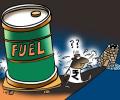
The windfall tax on oil produced within India and fuel exported overseas will make up for more than three-fourths of the revenue that the government lost when it cut excise duty on petrol and diesel to cool soaring inflation, industry sources said. India on July 1 joined a select league of nations globally that have taxed windfall gains accruing to oil companies from soaring energy prices. The government slapped a Rs 6 per litre tax on the export of petrol and jet fuel (ATF) and Rs 13 a litre on the export of diesel effective July 1. Additionally, a Rs 23,250 per tonne tax was levied on crude oil produced domestically.
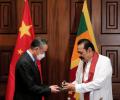
Chinese Foreign Minister Wang Yi on Sunday met Sri Lanka's top leadership and discussed a host of issues, including the debt crisis faced by the island nation, investments, promoting tourism and the fight against the COVID-19 pandemic as the two countries marked the 65th anniversary of diplomatic ties.
The massive coal mine in Queensland state has been a controversial topic, with the project expected to produce 2.3 billion tonnes of low-quality coal.

Stocks of Indian companies with exposure to Europe fell on Tuesday amid concerns about the impact on their sales in case the Russia-Ukraine crisis worsens and the US and its allies impose economic sanctions on Russia. While top conglomerates, including Reliance Industries, the Tata group, and Aditya Birla Group, said they did not have any significant exposure to Russia, executives of some of the oil and gas, pharmaceutical, and tea companies said they were monitoring the situation closely as they earned substantial income from the region. Russian President Vladimir Putin on Monday ordered troops into two breakaway regions of eastern Ukraine after announcing that Russia would recognise their independence.

Iran has complained of irregular shipments

The entire area has been cordoned off and National Disaster Management Authority has also been informed about the incident.

'Had a very fruitful meeting with Iranian defence minister Brigadier General Amir Hatami in Tehran. We discussed regional security issues including Afghanistan and the issues of bilateral cooperation,' Singh said in a tweet.
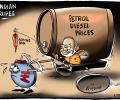
On Tuesday, Petroleum Minister Dharmendra Pradhan met Russian oil giant Rosneft's chief executive officer Igor Sechin and discussed raising crude imports from that country, in addition to talks about going for more acquisitions.

Emirates and Etihad Airways have over the past year continued to lobby India to allow them more flight slots, which won't be possible until the 2007 pact is revised.

From virtual yoga to empathy, the pandemic has prompted the e-commerce giant to double down on building innovations focused on improving remote work culture especially employee well-being, both mental and physical.

Officials from India's biggest private refiner recently visited Iran to chalk out the details for resumption of trade ties with Tehran.
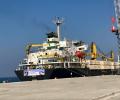
America's decision to give India exemption from imposition of certain sanctions for the development of the port is driven by the South Asian strategy, which was announced by President Donald Trump in August.

If not contained quickly, it will have a knock-on effect in the world economy and disrupt global supply chains, Crisil analysts warned.
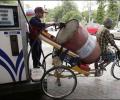
Oil prices dipped on Wednesday as the market prepared for a gradual increase of Iranian exports into an already oversupplied market from 2016.
India will raise the issue of illegal immigration, a "major cause of concern" for the country. Nayanima Basu reports
